
Why Active Restoration Matters
The Atlantic Forest is one of the richest and most diverse biomes on the planet.
It is home to around 20,000 plant species — more than 35% of Brazil’s flora — and, in some areas, holds the highest tree diversity per hectare in the world.
As the second-largest forest in Brazil, it stretches across 17 states, as well as parts of Paraguay and Argentina, encompassing a wide range of forest formations and ecosystems, including mangroves, coastal restingas, and high-altitude grasslands.
This extraordinary diversity results from the interplay of factors such as altitude, climate, and distance from the ocean, which together shape the complex composition of its landscapes—an irreplaceable natural heritage that is now severely threatened.
Restoring the Atlantic Forest requires conscious and continuous human intervention. Degraded areas left to recover on their own do not regain the complexity of the original forest; instead, they tend to be dominated by secondary growth and opportunistic species. For the forest to truly return, its biodiversity must be actively rebuilt through careful interventions, such as selective management of secondary vegetation, removal of invasive species, and reintroduction of native plants that once formed the original ecosystem.
Flora
The flora of the Atlantic Forest is among the richest on the planet, with around 20,000 plant species—more than 35% of all Brazilian flora—and the highest tree diversity per hectare ever recorded. Iconic species include pau-brasil, jequitibá-rosa, orchids, bromeliads, and fig trees, forming a mosaic of ecosystems that vary according to climate, altitude, and distance from the ocean. Despite its extraordinary richness, this biome is under severe threat: of the 200 Brazilian plant species at risk of extinction, 117 belong to the Atlantic Forest.
Fauna
The fauna of the Atlantic Forest is exceptionally diverse, sheltering hundreds of species—approximately 849 birds, 370 amphibians, 200 reptiles, 270 mammals, and 350 fish. Among them are emblematic and endangered animals such as the golden lion tamarin, jaguar, giant anteater, and little blue macaw, powerful symbols of the urgent need to protect this biome of incalculable value.
Our Mission
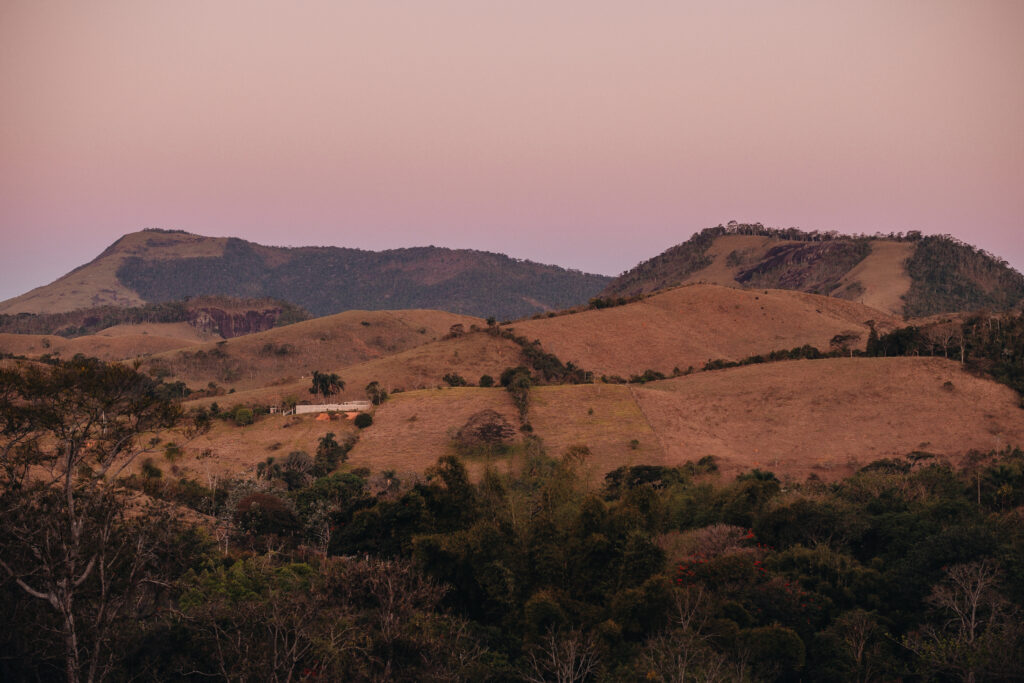
In the Paraíba Valley, centuries of deforestation and intensive land use have led to a critical loss of biodiversity. At Sítio São Pedro, for example, only a fraction of the originally recorded wildlife species remain, often in severely reduced populations. Many areas considered “forest remnants” are, in fact, former plantations or pastures undergoing spontaneous regeneration, with limited biological diversity. In terms of flora, Sítio São Pedro currently hosts only about 30% of the diversity of the original forest.
In response to this reality, the Instituto Mulungu works to recreate a new ecological dynamic, grounded in field studies and direct observation, seeking to come as close as possible to the original balance of the lost forest.